Choose an AI assistant to open this article URL with a summary request. Review generated summaries against the original article.
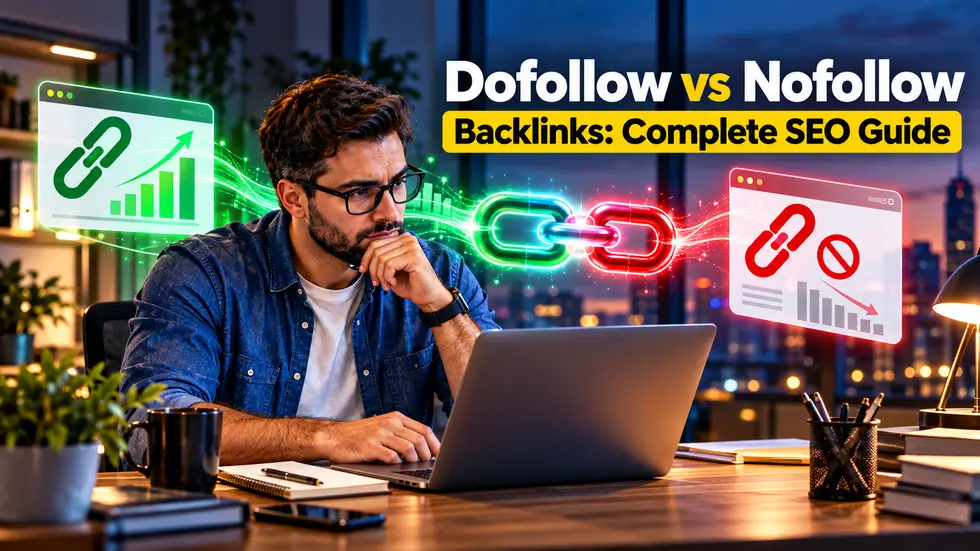
Dofollow vs Nofollow backlinks may look like a small HTML detail, but the difference affects how you judge authority, traffic, risk, and link-building opportunities.
Semrush’s 2024 ranking-factor study analyzed 16,298 English keywords and 300,000 ranking positions, and eight of its top 20 strongest ranking correlations were backlink-related, showing why links still deserve careful analysis.
This guide explains how each link type works, how Google treats nofollow today, when sponsored and UGC attributes matter, how link quality changes the decision, and how you can audit and build a safer backlink profile in 2026 today without chasing artificial ratios or risky shortcuts.
Dofollow vs Nofollow Backlinks: What Is the Real Difference?
A dofollow backlink is a normal crawlable link without a nofollow, sponsored, or ugc qualifier. “Dofollow” is SEO shorthand because HTML requires no rel=”dofollow” attribute. Google can use normal links to discover pages and understand relationships.
A nofollow backlink contains rel=”nofollow”, which tells Google that the linking site does not want to give an ordinary editorial endorsement. Google says links marked nofollow, sponsored, or UGC will generally not be followed, so you should not treat nofollow as guaranteed PageRank transfer. Even so, nofollow links can still deliver referral traffic, brand exposure, citations, and future editorial opportunities.
Link value can change after you earn it. Ahrefs’ 2026 statistics roundup says 66.5% of links observed across nine years became dead. A software that helps you monitor every backlink can flag lost links, changed attributes, and broken destinations so you can act quickly.
Must-know Tip: Do not rank opportunities by attribute alone. A relevant nofollow mention on a trusted page can beat a followed link on a weak page for traffic or visibility. Start with relevance, audience, editorial quality, and placement.
How Google Treats Nofollow, Sponsored, and UGC Links Today
Google does not frame qualified links as a simple “follow everything” or “ignore everything” choice. Its documentation says normal editorial links need no special rel value, paid placements should use rel=”sponsored”, user-generated links should use rel=”ugc”, and nofollow fits cases where the other labels do not apply. Multiple rel values can also appear on one link.
Many older guides still describe nofollow as completely invisible to Google. Google says qualified links will generally not be followed, while destinations can still be discovered through other routes. That makes absolute claims that every nofollow link is useless outdated.
Ahrefs’ 2026 SEO statistics report that 10.6% of backlinks to the top 110,000 sites are nofollow, while 0.44% of referring domains use rel=”ugc” and only 0.01% use rel=”sponsored”. Those numbers describe real backlink profiles, not a ratio you should copy. Your own mix should reflect how people naturally reference and promote your site.
Which Attribute Should You Use?
Use a normal followed link for genuine editorial citations, sponsored for paid or affiliate links, and UGC for user-inserted links. Use nofollow when the other labels do not fit, and you do not want ordinary association. For internal URLs, use proper crawling or indexing controls rather than treating nofollow as robots.txt or noindex.
Are Nofollow Backlinks Worth Getting for SEO?
Nofollow backlinks can be worthwhile when the page reaches the right audience. They can send traffic, build recognition, generate leads, and expose your content to future linkers. A respected nofollow placement can outperform a weak followed placement for business outcomes.
Judge the source before the label. Check topical relevance, visibility, editorial standards, audience intent, placement, and surrounding context. Semrush reported in 2025 that the median top-ranking page in its 2024 data had only 13 backlinks, showing why raw volume can mislead.
Reciprocal links need context. Ahrefs’ 2026 roundup says 73.6% of domains have reciprocal links and 43.7% of top-ranking pages have at least one, yet Google flags excessive exchanges built to manipulate rankings. Natural cross-linking can occur, but systematic exchange schemes add risk.
A Seven-Point Decision Check
Ask whether the page is relevant, trusted, visible, editorially controlled, useful to your audience, capable of sending traffic, and worth the acquisition cost. If most answers are yes, the opportunity may deserve attention even when it is nofollow. If most answers are no, a dofollow label will not rescue it.
Illustrative case study: A fictional Austin SaaS company, NorthPeak CRM, earned one nofollow newsletter mention and 12 followed directory links. The newsletter sent 318 visits and six trial sign-ups in a month, while the directories sent almost no traffic. Audience fit mattered more than the rel label.
Is Every Dofollow Backlink Valuable?
No, because a followed link can still come from a weak, irrelevant, or manipulative source. Google’s spam policies flag paid links that pass ranking credit, excessive exchanges, automated link creation, low-quality directories, optimized forum signatures, distributed footer links, and advertorial links built to manipulate rankings. A dofollow label does not make those tactics safe.
Relevance should be your first filter. A contextual link from a credible niche page usually gives readers and search engines clearer meaning than a followed link buried on an unrelated page. The linking page, editorial reason, anchor text, traffic, and surrounding content all affect practical value.
Modern link indexes make filtering essential. Semrush currently reports more than 43 trillion backlinks, about 390 million referring domains, and roughly 10 billion URLs crawled per day. Tools surface patterns quickly, but judgment still decides whether a link is credible.
Weak Dofollow or Strong Nofollow?
Choose according to your goal. A legitimate followed link from a strong relevant page is normally better for ranking equity, while a nofollow mention from a major publication may be better for reach, reputation, and referral traffic. Strong campaigns use both when each supports a clear objective.
Must-know Tip: Patrick Stox of Ahrefs wrote in 2025 that “links should be a part of your SEO strategy, but they shouldn’t be your whole strategy.” Backlinks cannot compensate for poor content, weak search intent, or technical problems. Treat them as one part of a wider SEO system.
What Is a Good Dofollow-to-Nofollow Backlink Ratio?
There is no universal dofollow-to-nofollow ratio. Google publishes no safe percentage, and manufacturing one can push you toward artificial link building. A natural profile reflects editorial mentions, PR, communities, partners, reviews, and paid promotion.
Anchor text matters for the same reason. Google recommends concise, descriptive anchor text and warns against keyword stuffing, so healthy profiles normally contain branded, URL, partial-match, generic, and contextual variations. Repeating the same money keyword across many followed links can make a profile look manufactured.
Must-know Tip: Tim Soulo of Ahrefs observed, “This could be an indication that Google values some nofollowed links from strong pages more than followed links from weak pages.” He also cautioned that the finding was not conclusive. Quality and context should therefore come before the label.
How to Audit and Build a Safer Backlink Profile
Separate followed, nofollow, sponsored, and UGC backlinks in your SEO platform. Check whether each page works, points to the right destination, uses the expected anchor, remains relevant, and has credible context. Review lost links, redirects, suspicious sitewide links, and unqualified paid placements.
Do not confuse third-party authority scores with Google metrics. Ahrefs reports that 64% of SEO professionals in an Aira survey trusted its link data, but it warns against using Domain Rating alone. Use authority scores for triage, then verify traffic, relevance, page quality, and editorial value.
Build future links with assets publishers have a reason to cite, such as original data, calculators, templates, and useful comparisons. Backlinko’s current large-scale study reports that the number-one Google result has about 3.8 times more backlinks than positions two through ten on average. That correlation does not mean you should copy competitors link for link.
Keep paid promotion separate from ranking manipulation. Google permits ads and sponsorships when links use sponsored or nofollow, while paid links built to pass ranking credit can violate spam policies. Measure referring domains, lost links, traffic, conversions, anchor diversity, and linked pages.
Conclusion
Dofollow vs Nofollow backlinks should guide your analysis, not control every link-building decision. Followed editorial links can contribute more directly to ranking signals, while nofollow links can still deliver traffic, brand exposure, trust, discovery, and future citations when the source is relevant.
The best strategy in 2026 is to earn useful placements, qualify paid and user-generated links correctly, avoid manipulative schemes, monitor changes, and judge every backlink by relevance, editorial quality, audience value, risk, referral potential, and whether the placement genuinely helps users across rankings, referral traffic, brand visibility, and sustainable long-term organic search growth results.
You do not need a magic ratio or thousands of links to build a credible profile. You need links that make sense in context and support real goals. Keep reading through the FAQs to resolve the practical questions that often cause costly backlink mistakes.
Frequently Asked Questions
Do Nofollow Backlinks Help SEO?
They can bring traffic and discovery. Google says qualified links generally will not be followed. Judge the source and audience.
Does Nofollow Pass PageRank?
Google does not promise PageRank transfer through nofollow links. Qualified links generally will not be followed. Treat direct value as uncertain.
Is Dofollow a Real HTML Attribute?
No. Normal followed links need no rel=”dofollow”. “Dofollow” is SEO shorthand.
Should Affiliate Links Be Nofollow or Sponsored?
Use sponsored for affiliate and paid links. Google still accepts nofollow, but sponsored is preferred. Qualify compensated links.
Should Internal Links Be Nofollow?
Usually, no. Internal links support discovery and structure. Use proper crawl or index controls instead.
What Is the Best Dofollow-to-Nofollow Ratio?
There is no official ideal ratio. Natural profiles vary. Focus on legitimate sources, not manufactured percentages.
Can Too Many Dofollow Links Hurt SEO?
The number alone is not the problem. Manipulative acquisition creates risk. Earned editorial links can scale naturally.
Are Reddit or Wikipedia Nofollow Links Valuable?
They can create visibility and traffic. Do not chase them only for ranking signals. Audience relevance decides value.
How Long Does a Backlink Take to Affect Rankings?
There is no fixed timetable. Search engines must process the link. Competition, relevance, and page quality matter.
Weak Dofollow or Strong Nofollow: Which Is Better?
Choose according to your goal. Followed links often win for ranking signals, while trusted nofollow links can win for reach. Quality comes first.

Andrew Thomas
View all postsReady to make backlink monitoring easier?
Monitor backlink status, scheduled rechecks, authority metrics, spam signals, history, and available contact data from one focused workspace.